📍 Places to Visit
Jeollanam-do Board



Jeollanam-do at a Glance
Administrative Division Guide (July 2026) — On July 1, 2026, Jeollanam-do and Gwangju Metropolitan City were integrated, and the Jeonnam-Gwangju Unified Special City (abbreviated as Gwangju Special City) was launched. Although Jeollanam-do as a
do(province) has been abolished, addresses will continue to use existingsi(city) andgun(county) names, and 'Jeonnam' on this page refers to the Namdo region traditionally known as Suncheon, Yeosu, Damyang, Boseong, and so on.
Located in the southwestern part of the Korean Peninsula, Jeollanam-do is a 'land of life' where vast plains and a ria coast created by over 2,200 islands harmonize. Thanks to its abundant natural environment, its food culture has greatly developed since ancient times, earning it the name 'land of taste' or 'culinary destination.' It is also a 'home of arts' (Yehyang) and a 'home of righteous spirit' (Euihyang), where unique arts of the Namdo region like pansori and the history of righteous armies (uibyeong) who fought against injustice breathe. The diverse sights and foods offered by its fertile land and sea provide a special experience to all visitors.
Recommended for
- Foodies: Those who want to experience the essence of taste, from Namdo Hanjeongsik (Korean set meal) to fresh seafood.
- Nature Lovers: Those who want to relax in the embrace of nature, from the beautiful gardens of Suncheonman National Garden to the blue sea of Dadohae.
- History and Culture Explorers: Those who want to take a meaningful journey following ancient temples and traditional houses, pansori, and the history of democratization.
- Slow Travelers: Those who want to spend leisurely time along tranquil islands and beautiful coastal roads.
- Family Travelers: Those looking for attractions that all generations can enjoy together, from diverse ecological experiences to water play facilities.
How to Get There and Access
From the Seoul Metropolitan Area and Major Cities
- KTX/SRT: You can reach Mokpo Station, Suncheon Station, Yeosu Expo Station, and GwangjuSongjeong Station from Seoul (Yongsan Station/Suseo Station) in about 2 hours 30 minutes to 3 hours using KTX or SRT.
- Express Bus: Routes to various
si(cities) andgun(counties) in Jeonnam operate from major terminals nationwide, including Seoul Central City Terminal, taking approximately 3 hours 30 minutes to 5 hours. - Air: Domestic flights are available from Gimpo Airport to Yeosu Airport, Gwangju Airport, and Muan International Airport.
Local Transportation
- City and Rural Buses: Most areas in Jeonnam are connected by city and rural buses, but service intervals can be long, so it's advisable to check the timetable in advance.
- Rental Car: Renting a car near KTX stations or airports is the most convenient way to travel freely to islands and mountainous areas.
- Passenger Ferry: To go to various islands of Dadohae, you must take a ferry from coastal passenger terminals in major ports like Mokpo, Yeosu, and Wando.
Top 5-7 Attractions
- Suncheonman National Garden & Suncheonman Wetland: Korea's first national garden, where you can enjoy the outstanding natural scenery of one of the world's five major coastal wetlands along with gardens from various countries.
- Hyangiram Hermitage, Yeosu: A hermitage on a cliff where the sunrise creates a spectacular view against the backdrop of the blue Southern Sea.
- Juknokwon Bamboo Forest, Damyang: A representative healing spot where you can enjoy bamboo forest bathing while walking through dense bamboo groves.
- Boseong Green Tea Plantation: A picturesque place where endless green tea fields unfold.
- Sinan Purple Island: A unique island where the entire island is decorated in purple, selected as a UNWTO Best Tourism Village.
- Daeheungsa Temple, Haenam: A thousand-year-old temple nestled in the beautiful nature of Duryun-san, designated as a UNESCO World Cultural Heritage site.
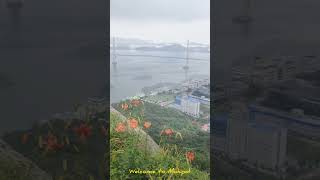
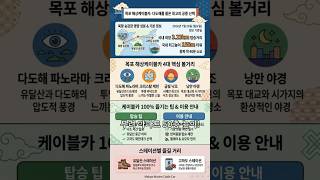
- Mokpo Marine Cable Car: Korea's longest cable car, crossing over the sea to offer panoramic views of Yudalsan Mountain and the Dadohae archipelago.
Local Foods & Specialties
- Damyang Tteokgalbi: Damyang's representative dish, loved by all ages, made from seasoned minced beef ribs grilled over charcoal.
- Beolgyo Cockle Set Meal: A delicacy where fresh and chewy cockles are boiled, seasoned, and grilled, offering a variety of flavors.
- Yeosu Gejang Baekban: A 'rice thief' dish where soy-marinated crab (
ganjang-gejang) and spicy marinated crab (yangnyeom-gejang) made from stone crabs are enjoyed with abundant side dishes. - Yeonggwang Gulbi: Yeonggwang's specialty, a dried yellow croaker (
gulbi) dried in the sea breeze of Beopseongpo, known for its superb savory taste. - Gangjin Maesaengi: A winter delicacy characterized by its soft and fragrant taste, grown in the clean tidal flats of Gangjin Bay.
Seasonal Recommendations
- Spring (March-May): It's great to enjoy a vibrant spring flower trip, starting with the blooming plum blossoms in Gwangyang Maehwa Village and sansuyu (cornelian cherry) flowers in Gurye.
- Summer (June-August): Beat the summer heat by swimming at Yulpo Beach in Boseong or enjoying the Jeongnamjin Jangheung Water Festival.
- Autumn (September-November): The golden reed beds of Suncheonman Wetland and the colorful autumn foliage of Baekyangsa Temple in Jangseong add to the deepening atmosphere of autumn.
- Winter (December-February): It is recommended to conclude the year and watch the New Year's sunrise at Ttangkkeut Village in Haenam, or appreciate the red-blooming camellia flowers on Odongdo Island in Yeosu.
Tips for Foreign Visitors
- Language and Information: Major tourist attractions have good English guide signs, but communication might be difficult at local bus terminals or small restaurants. It's a good idea to prepare a translation app in advance.
- Payment: Credit cards are accepted at most restaurants and shops, but cash may be needed at traditional markets, small shops, or on rural buses.
- Transportation: Intercity buses and rural buses often have complex routes and announcements only in Korean, so KTX or rental car use is more recommended for foreign travelers.
🗺 Choose a destination on the map
Today's Videos
News![[Vlog] 2-night, 3-day Mokpo Food Trip 🍃](https://i.ytimg.com/vi/-IwnIWK7Pk4/hqdefault.jpg)



![[Mokpo Trip] A couple who eats the moment they wake up, walks to digest, and eats again (ft. Grilled Sea Eel, Raw Chicken Gizzard, Hwedupbap, Fried Chicken)](https://i.ytimg.com/vi/C8pGbOIxphE/hqdefault.jpg)





Recommended Videos
News

![Boseong Travel Vlog | From Boseong Green Tea Fields to Hidden Gems🌿A Simple Day | [vlog] [Joo-a-daum]](https://i.ytimg.com/vi/eQgzbncbsRY/hqdefault.jpg)


![[ 담양여행 베스트8 코스 ] 가을에 꼭 가야할 전라남도 담양여행 추천코스 미리보기, 담양여행정보, 여행꿀팁, 담양가볼만한곳 #유추여행전라남도](https://i.ytimg.com/vi/cE5CNhvkJ2g/hqdefault.jpg)


![Time travel to modern Mokpo.. Cultural Heritage Night Tour [Mokpo MBC Newsdesk]](https://i.ytimg.com/vi/jRdABj8H1_M/hqdefault.jpg)


