Autumn 2026 Time-Travel Guide: Gimhae Daeseong-dong Tumuli, a UNESCO World Heritage Site
🎬 Watch videosAutumn 2026 Time-Travel Guide: UNESCO World Heritage Gimhae Daeseong-dong Tumuli
Serving as the centerpiece of the "Gaya Tumuli" inscribed on the UNESCO World Heritage list in 2023, the Gimhae Daeseong-dong Tumuli stand as a vibrant testament to the rich history of Geumgwan Gaya. As the crisp autumn breeze sets in this 2026, step onto these rolling city hills for a journey through time and encounter the Gaya kings of 1,500 years ago. Here is your complete one-day guide covering everything from the museum and outdoor burial mounds to neighboring historic sites.
Daeseong-dong Tumuli at a Glance
- Significance: UNESCO World Heritage site; elite cemetery of the Geumgwan Gaya ruling class from the 1st to 5th centuries
- Location: Around 126 Gaya-ui-gil, Gimhae-si, Gyeongsangnam-do
- Opening Hours:
- Outdoor Tumuli: Open 24/7
- Daeseong-dong Tombs Museum: 09:00 – 18:00 (Last admission at 17:30)
- Closed: Mondays, January 1, New Year’s Day (Seollal), and Chuseok (Museum only)
- Admission: Free (both outdoor tumuli and museum)
- Autumn Highlights: Gentle hill walking trails, sweeping panoramic views of downtown Gimhae, and swaying silver grass at the summit
Why Go: What Makes Daeseong-dong Tumuli Special
Nestled between Gujibong Peak—steeped in the founding mythology of Gaya—and the Bonghwang-dong Historic Site, the Gimhae Daeseong-dong Tumuli served as the royal necropolis of Geumgwan Gaya. In September 2023, its global historical significance was officially recognized when it was inscribed on the UNESCO World Heritage list alongside six other Gaya tumuli clusters under the collective name "Gaya Tumuli."
Archaeological excavations begun in 1990 have unearthed more than 300 tombs, vividly reflecting the societal evolution of Gaya. The transition from simple flat-ground wooden coffin graves (neol-mudeom) to massive wooden chamber tombs (deotneol-mudeom) constructed atop the ridge illustrates the expanding power of Gaya's ruling elite. In addition, an array of foreign artifacts—including bronze cauldrons from northern nomadic tribes, bronze mirrors from China's Han Dynasty, and wave-patterned bronze ornaments (paehyeongdonggi) from Japan—were discovered here, proving that Daeseong-dong was once a bustling hub of ancient East Asian maritime trade and diplomacy.
Recommended Itineraries: Half-Day to Full-Day
Choose between two routes tailored to your schedule, whether you prefer a quick deep-dive into the highlights or a comprehensive full-day immersion in Gimhae's Gaya heritage.
| Route | Core Highlights (Approx. 2–3 Hours) | Full-Day Course (Approx. 5–6 Hours) |
|---|---|---|
| Itinerary | ① Daeseong-dong Tombs Museum → ② Outdoor Tumuli Stroll & Open-Air Exhibition Hall | ① Daeseong-dong Tombs Museum → ② Outdoor Tumuli → ③ Tomb of King Suro → ④ Bonghwang-dong Historic Site → ⑤ Gimhae National Museum |
| Highlights | Focused exploration of key relics and royal tombs of Geumgwan Gaya | A complete historical journey through Gimhae's iconic Gaya landmarks in one day. An ideal walking route for autumn. |
| Transit | On foot | On foot & 1–2 stops via the Busan-Gimhae Light Rail Transit (BGL) |
Key Stops on the Full-Day Course
- Tomb of King Suro: The resting place of Suro, the legendary founder of Gaya, surrounded by a tranquil, beautifully landscaped park ideal for a contemplative walk.
- Bonghwang-dong Historic Site: An ancient settlement site featuring residential remains and prehistoric shell mounds (paechong).
- Gimhae National Museum: The definitive treasure trove of Gaya history and culture, displaying comprehensive collections from across the Gaya confederacy alongside Daeseong-dong artifacts. Prior reservation via the official website is required at least one day before your visit.
Looking for more autumn travel inspiration? Check out our [September Recommendations] page.
Autumn Travel Essentials
- Comfortable Walking Shoes: Exploring the rolling tumuli hills and adjacent historic sites involves significant walking, so comfortable sneakers or light trail shoes are recommended.
- Camera: The open skyline overlooking downtown Gimhae framed by shimmering silver grass under the autumn sun makes for spectacular photography.
- Transit Card: Essential for quick and easy transfers between the Busan-Gimhae Light Rail Transit and local city buses.
- Light Layers: Temperatures can fluctuate considerably between day and night in autumn, so pack a light jacket if you plan to stay until evening.
Getting There & Parking
By Public Transit
The Busan-Gimhae Light Rail Transit (BGL) is the fastest and most convenient route. You can transfer from Busan Metro Line 2 at Sasang Station or Line 3 at Daejeo Station.
- Royal Tomb of King Suro Station: Exit 2, approx. 5 minutes on foot. This is the closest stop to Daeseong-dong Tumuli and the museum.
- Museum Station: Exit 2, approx. 10 minutes on foot. Convenient if you plan to start your tour at the Gimhae National Museum.
By Car & Parking
- Daeseong-dong Tombs Museum Parking Lot: Accommodates roughly 81 vehicles; parking is free of charge (as of 2019-08-30).
- Nearby Public Parking: The museum lot can fill up quickly on weekends and public holidays. Alternative options include the Gimhae Public Health Center parking lot and the Gongju Park off-street public parking lot.
Special Autumn Programs for 2026
To celebrate its UNESCO World Heritage status, Daeseong-dong Tumuli hosts a variety of special seasonal events. Be sure to check the schedule ahead of your trip.
- [Upcoming] 2026 Gimhae National Heritage Night: October 16 (Fri) – October 18 (Sun), 2026, held around the Tomb of King Suro and Daeseong-dong Tumuli. Enjoy nighttime cultural festivities featuring media facade projections, drone shows, and traditional performances. If you love historic walking tours in other Korean cities, our [Mokpo Modern Architecture Autumn Walk] guide is another great option.
- [Tomorrow] Sunset Concert at Daeseong-dong Tumuli: September 19 (Sat), 2026 at 17:30, held at the outdoor plaza in front of the Daeseong-dong Tombs Museum. Enjoy an open-air classical music performance with free admission and no prior booking required.
- [Concluded] 2026 World Heritage Festival – Gaya Tumuli: Held from August 28 to September 10 across all seven Gaya tumuli sites. This festival takes place annually in late summer and early autumn, so keep it on your radar for future visits.
Frequently Asked Questions (FAQ)
Q. Are there admission or parking fees? A. No. Admission to both the outdoor Daeseong-dong Tumuli grounds and the Daeseong-dong Tombs Museum is completely free. Parking at the museum lot is also free.
Q. Is prior booking required for visiting? A. No reservation is required for self-guided visits. However, if you would like an expert cultural heritage commentator to guide your tour, we recommend booking a free guided program via the Gimhae Tourism Portal at least one day in advance. Reservations can be made for parties of one or more.
Q. Is it suitable for families visiting with children? A. Yes, very much so. The Daeseong-dong Tombs Museum is built on a single-story layout with ramps, making it easy to navigate with strollers and wheelchairs. The spacious grassy mounds outside provide a safe, open environment for children to explore. In addition, the neighboring Gimhae National Museum houses a dedicated Children's Museum.
Q. What is the Outdoor Open-Air Exhibition Hall? A. It is a specialized on-site pavilion preserving wooden chamber tombs No. 29 and No. 39 exactly as they were unearthed during excavation. Seeing the original burial layout and the positioning of funerary goods firsthand offers an authentic, vivid window into ancient Gaya funeral customs.
Today's Videos
News
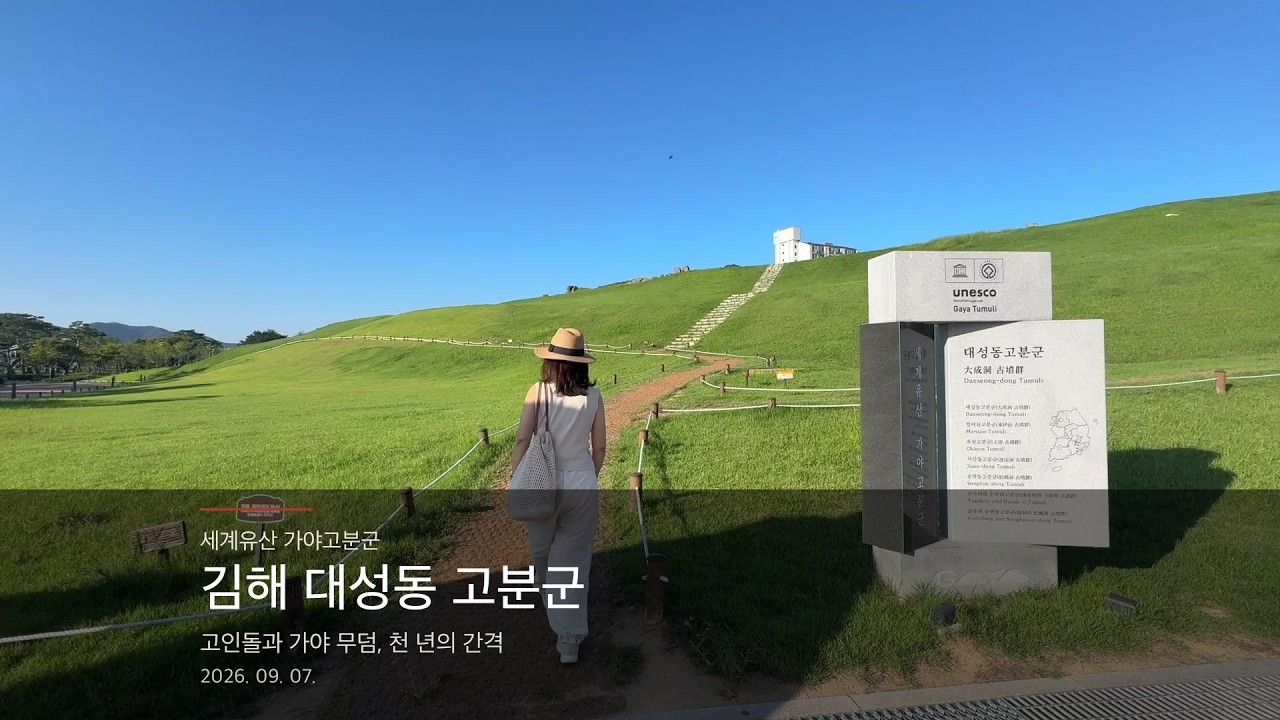


![[Route of Gaya Civilization] Gimhae Daeseong-dong Tumuli #1 | National Heritage Visit Course Audio Guide (Sign Language Video)](https://i.ytimg.com/vi/w2Xd-Vq0VPk/maxresdefault.jpg)






![[Gimhae One-Month Backpacking Trip] UNESCO World Heritage Daeseong-dong Tombs #김해에반해 #김해 한 달 여행 #김해관광 #김해에 스밈애 #여행](https://i.ytimg.com/vi/nrAEHZ-wjpc/maxresdefault.jpg)